Project News • May 22nd, 2024
The largest camera ever built for astrophysics has completed the long journey from SLAC National Accelerator Laboratory in California to the summit of Cerro Pachón in Chile, where it will soon help unlock the Universe’s mysteries.
Project News • May 21st, 2024
There's a brand new version of IRSA Viewer, and time series tool, DCE, catalog search tool, data discovery (that box on the IRSA front page), IRTF, and Atlas.
Project News • May 16th, 2024
The NASA Exoplanet Archive has added four new planets that bring the total confirmed planet count to 5,630.
Project News • May 8th, 2024
Black holes - what are they really? Learn this and more with “Astro-Investigates,” a new video series that explores and explains big astrophysics topics with the help of NASA scientists. Caltech/IPAC's Keith Miller (Editor/Director/Co-Producer) and Robert Hurt (Science Visualizations/Co-Producer)...
IPAC News • May 3rd, 2024
It’s the end of an era for IPAC, and the start of a new one. After more than four decades of dedicated service to IPAC, 25 years of which he was serving as IPAC Executive Director, George Helou announced he is stepping down from the role at the end of the year.
Project News • March 21st, 2024
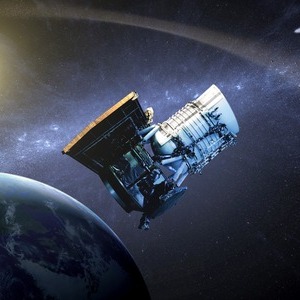
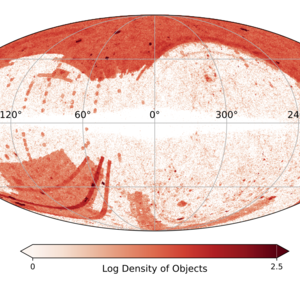
The Near-Earth Object Wide-field Infrared Survey Explorer (NEOWISE) and IPAC at the California Institute of Technology announce the NEOWISE 2024 Data Release.
Project News • March 19th, 2024
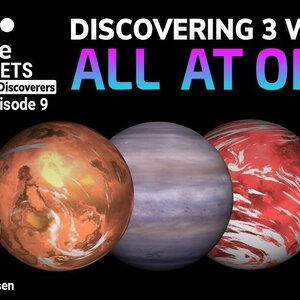
What's better than discovering an exoplanet? How about discovering THREE exoplanets...all at once! Early-career researcher Dr. Emily Gilbert talks about the exoplanet bonanza of the TOI-700 system that made headline news around the world in 2020. Emily also reveals her favorite fictional planet...
Project News • February 29th, 2024
NED announces the February 2024 release. Highlights include updates on holdings, references and object pointers, new objects and cross-IDs, redshifts and more!
IPAC News • February 15th, 2024
Dr. Tracy Chen, a member of IPAC since 2009, was appointed the new Zwicky Transient Facility (ZTF) Science Data System Lead, starting on January 2nd, 2024.
Project News • February 13th, 2024
As NASA explores the unknown in air and space, a new mission to survey ultraviolet light across the entire sky will provide the agency with more insight into how galaxies and stars evolve. The space telescope, called UVEX (UltraViolet EXplorer), is targeted to launch in 2030 as NASA’s next...