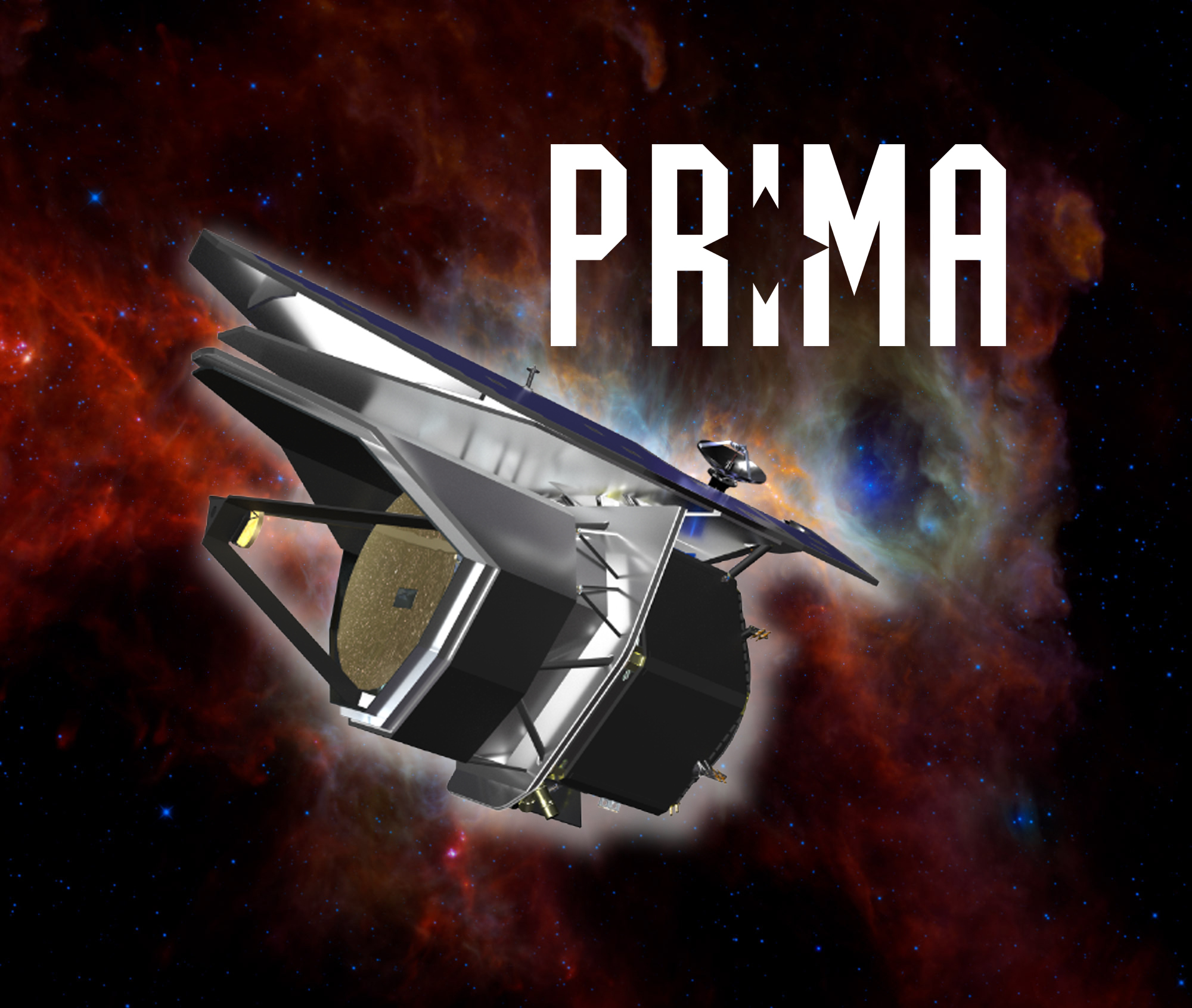


Overview: PRIMA will be a cryogenically-cooled, far-infrared observatory for the community for the next decade. PRIMA has been selected by NASA to move into Phase B, the stage of development that advances the preliminary design and technology development for the mission. The mission is subject to a confirmation review, based on technical, programmatic, and cost performance, to determine its readiness to begin implementation in Phase C. The observatory will be targeted to launch in 2033, for a planned five-year mission. PRIMA addresses all 3 science goals for a far-IR Probe from the National Academy of Sciences Astronomy 2020 Decadal Survey: 1. Tracing the astrochemical signatures of planet formation 2. Probing the co-evolution of galaxies and their supermassive black holes across cosmic time 3. Measuring the formation and buildup of galaxies, heavy elements, and interstellar dust from the first galaxies to today
IPAC at Caltech will perform science center functions, including observation planning and scheduling, scientific data processing, archiving and dissemination.
Mission News