IPAC News • June 17th, 2026
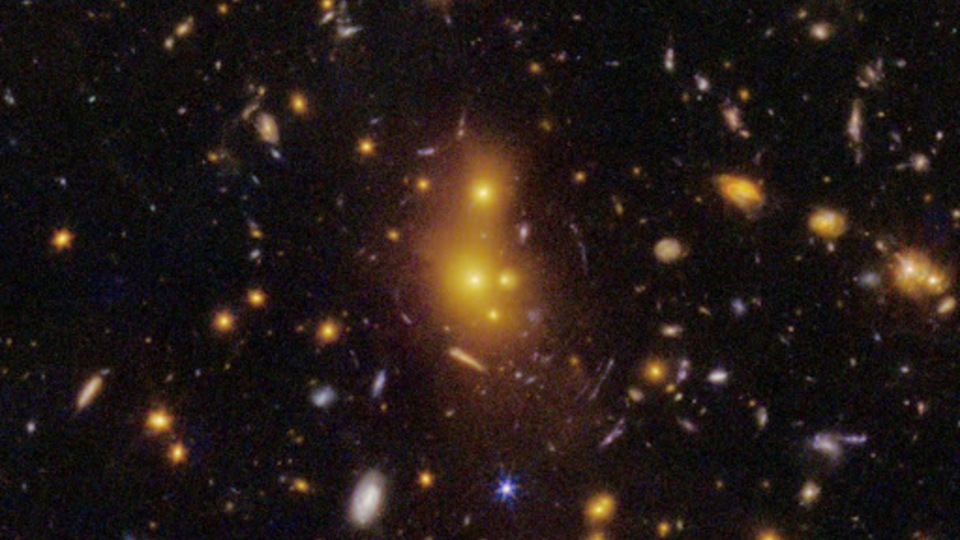
New observations from NASA’s James Webb Space Telescope add to the intrigue surrounding a young, but surprisingly mature galaxy cluster from the early universe that challenges prevailing theories of cosmic evolution.
IPAC News • June 16th, 2026
New research led by a scientist at IPAC—a science and data center for astrophysics and planetary science at Caltech—studying the hot Jupiter CoRoT-2 b has settled on one of the...
IPAC News • June 3rd, 2026
The Kepler mission and its follow-on K2 discovered thousands of exoplanets around different types of stars, and new work reveals broader trends in the planetary populations of...
Near-Earth Object Surveyor • May 5th, 2026
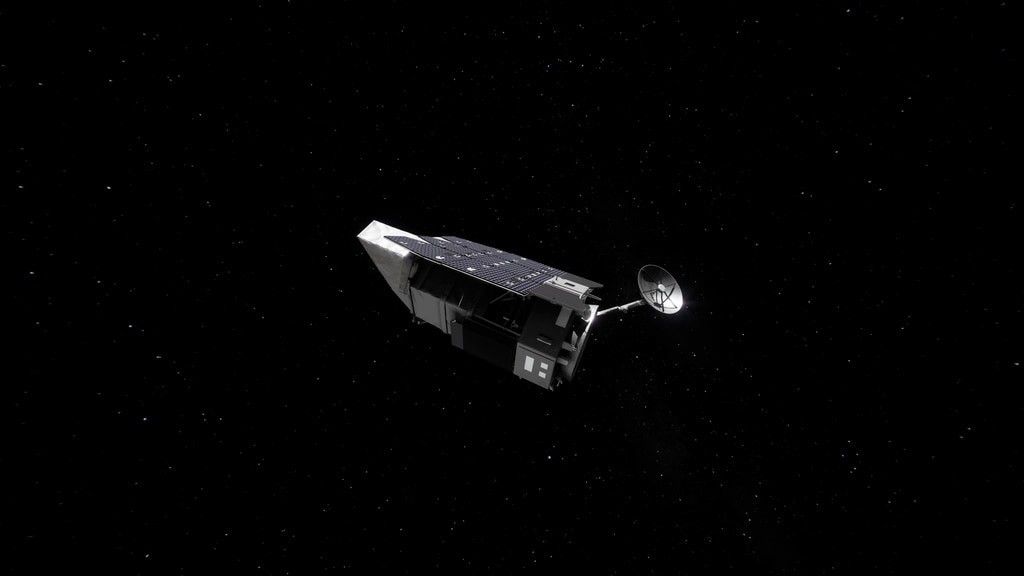
The Near-Earth Object (NEO) Surveyor — NASA’s first infrared space telescope purposely designed to discover potentially hazardous asteroids and comets — is undergoing...
IPAC News • July 8th, 2026
There were many changes in the IPAC team in the first half of 2026. We filled 17 positions with people who either joined IPAC afresh or with existing staff who transitioned to...
IPAC News • June 25th, 2026
At the AAS 248 conference in Pasadena, IPAC hosted a reception for conference attendees. Did you “step up, get scanned and ... see yourself in a new light?”
New observations from NASA’s James Webb Space Telescope add to the intrigue surrounding a young, but surprisingly mature galaxy cluster from the early universe that challenges...
IPAC News • April 6th, 2026
IPAC has named Drs. Harry Teplitz as its new Head of Science Staff (HoSS) and Roberta Paladini as Deputy Head, tasking the senior researchers with leading the center's...
Euclid • July 17th, 2026
For generations, astronomers have been puzzled by a deceptively simple question: Why do some spiral galaxies have two arms while others have many? Researchers at East Tennessee...
Euclid • July 6th, 2026
Euclid space telescope has discovered 31 of the oldest quasars ever documented.Two are the oldest ever observed, dating back to the universe’s infancy.
Euclid • June 24th, 2026
The largest and most detailed photo ever made of our Milky Way galaxy’s centre in visible light is revealed today by the European Space Agency’s Euclid mission. Packed with more...
Roman • June 24th, 2026
A new look at the heart of our Milky Way galaxy by Euclid, an ESA (European Space Agency) mission with NASA contributions, overlaps with a region scientists will observe with...
Euclid • June 10th, 2026
Learn more about Euclid at AAS #248 meeting on June 14-18, 2026 in Pasadena! ENSCI workshop is on Sunday, Euclid special session is on Thursday.
Euclid • May 8th, 2026
A new Euclid citizen science project, Space Warps, has been launched on the Zooniverse platform! You can join to help find strong gravitational lenses in the Euclid data.