
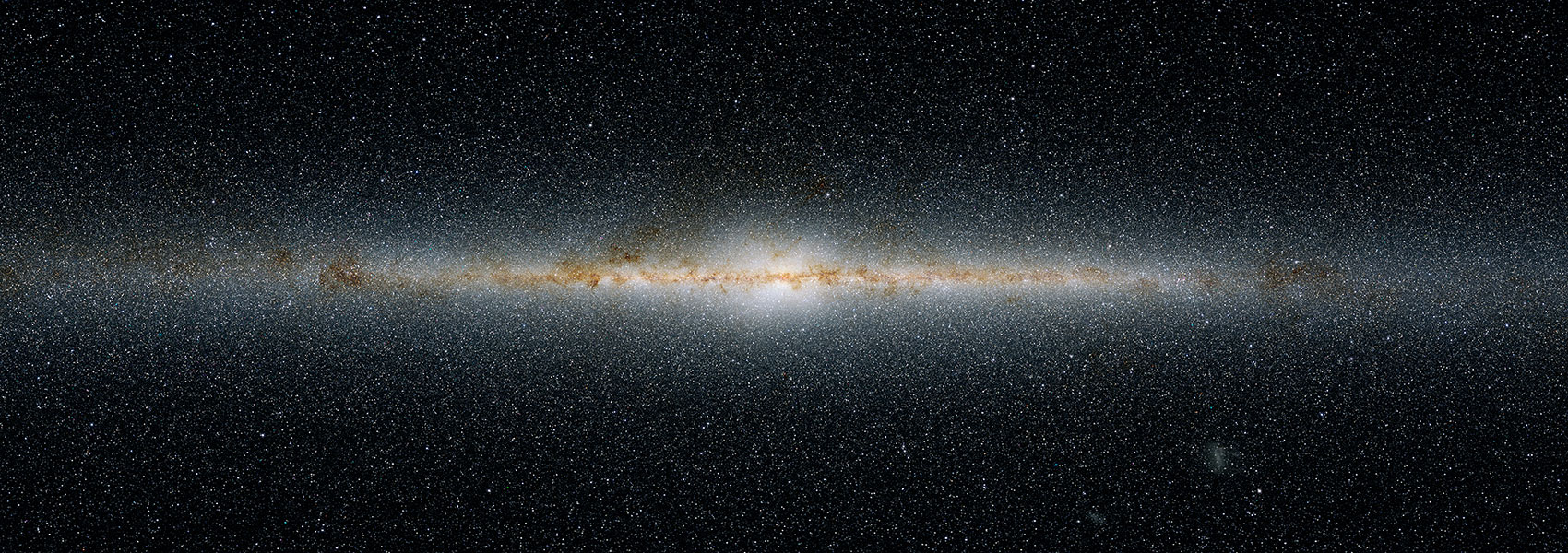
SPHEREx 0.75-5 μm Spectra for a Sequence of Nearby Brown Dwarfs
October 2026 • 2026ApJ..1009..185R
Abstract • The SPHEREx all-sky survey has now measured the R ~ 40--100 infrared spectra of thousands of nearby brown dwarfs in the chemically rich 0.75--5 μm range. The survey's wide spectral coverage and high S/N permits flux measurements that capture several broadband molecular absorption features and upwards of 80% of the total bolometric luminosity of most brown dwarfs. Atmospheric models are known to yield systematic disagreements in the inferred temperatures and radii of brown dwarfs, necessitating benchmarking against observations. In this work, we present SPHEREx spectra across a broad sequence of 33 nearby field brown dwarfs, ranging from L0 to Y4 (~2500--250 K) and compare them to theoretical expectations. We additionally compile spectra for separate low-gravity and low-metallicity objects, and show how they trend with constant spectral type. We fit the measured spectra to the well-known forward model grids Sonora Diamondback, Elf Owl, BT-Settl, ATMO2020, and ATMO2020++ and compare their goodness-of-fit as a function of wavelength, spectral type, and treatment of clouds and chemistry. We find that the models continue to struggle to simultaneously fit the J/H/K peaks and the 4 μm opacity window, especially in L/T transition objects. The largest deviations appear around the chemistry-sensitive CO2 and CO features. Despite these offsets, the models broadly capture their trends across the L/T transition, with the observed sample of field dwarfs strongly preferring the weak vertical mixing (kzz = 104 cm2s-1) Elf Owl models over strong mixing. The spectra shown here along with future SPHEREx data will help guide improvements to models.
Links
IPAC Authors
(alphabetical)
IPAC Deputy Director

Staff Scientist
.png?1523393848)
Staff Scientist
Scientific Analyst

Staff Scientist
Postdoctoral Scholar