
Vihang Mehta
Assistant Scientist
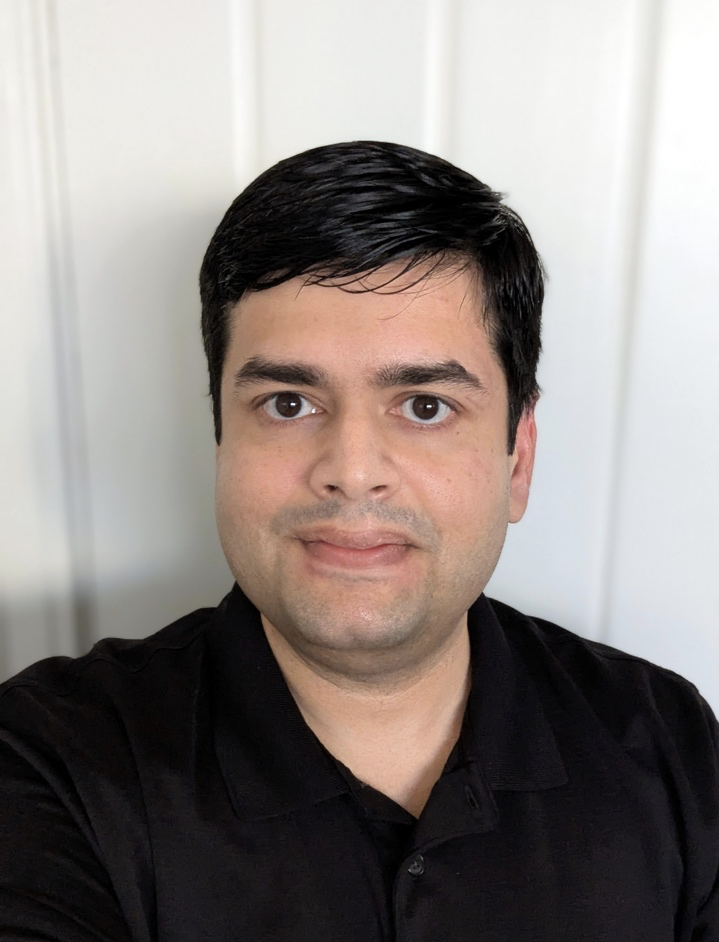
Vihang Mehta works at IPAC’s Roman Science Support Center where he is developing the pipeline to reduce Wide Field Instrument (WFI) spectral data that will come from NASA’s Nancy Grace Roman Space Telescope.
How did you get interested in astronomy?
Ever since childhood, I was always fascinated by the stars in the night sky, and I was often gifted books on topics related to planets or astronomy. I still remember the first book that really piqued my interest⎯I think it was called “Earth and Space.” Shortly after, I was reading about all the planets in the solar system, and then stars and constellations, and then galaxies.
When I was a bit older, we managed to obtain a small refractor telescope, and then it was time for the more hands-on shenanigans. I was soon reading sky charts and tracking down planets to point the telescope at. I was also lucky enough to be able to witness multiple significant astronomical events growing up: comet Hale-Bopp in 1997, the total solar eclipse in 1999, the Venus transit in 2004, and multiple lunar eclipses. For all but the first, I was able to view them through my telescope, and I can only describe each as quite the surreal experience.
Thinking back, these were the first observations I ever took, and I had to deal with all the classic issues like getting the proper observing setup, tracking the target, setting the correct focus, safety measures, and last but never the least, dealing with weather! All this effort, just to have everyone else point to the television broadcast with much higher-quality images. Nonetheless, this left an everlasting impression on myself and set in motion my lifelong obsession with astronomy.
Another one of my earliest influences was Kalpana Chawla. She was an Indian astronaut aboard the Space Shuttle Columbia and was tragically killed in the 2003 re-entry accident. Growing up in India, her career inspired me and many others to consider paths in space science and astronomy. Her example showed me that someone from where I grew up could meaningfully contribute to humanity’s exploration of space.
What was your career path to astronomy like?
Through middle and high school, I was already leaning more towards the sciences and mathematics. I continued to focus on physics towards the end of high school.
Early on in my undergraduate studies at Stony Brook University in Long Island, NY, I picked astronomy/planetary sciences as my major. I was lucky enough to be able to pursue astrophysics through my tenure as an undergraduate, and later as a graduate student at the University of Minnesota.
I was also able to participate in an observing run at the Cerro Tololo Interamerican Observatory in Chile just before Covid closed down everything.
How did you first hear about IPAC and what made you interested in working here?
I visited IPAC for the first time in 2017. My graduate studies advisor was a postdoc at IPAC previously, and I naturally got acquainted with her various collaborators, including those at IPAC. I worked with multiple IPAC staff members (particularly, Harry Teplitz and Peter Capak) on multiple science projects, and they left a very positive impression of the work environment at IPAC.
During my visit, I also met several of the postdocs and staff members at the time, which helped further establish in my mind that IPAC is a really a tight-knit community of scientists, supporting key science missions while also allowing them to pursue highly interesting research topics. The variety of science missions and archives, and the collaborative effort between them was quite compelling.
Personally, I was especially interested in working in a science center environment rather than a traditional university setting. The research side of science has always been what most motivates me, and the project-research mix at IPAC was a perfect fit for my interests and working style.
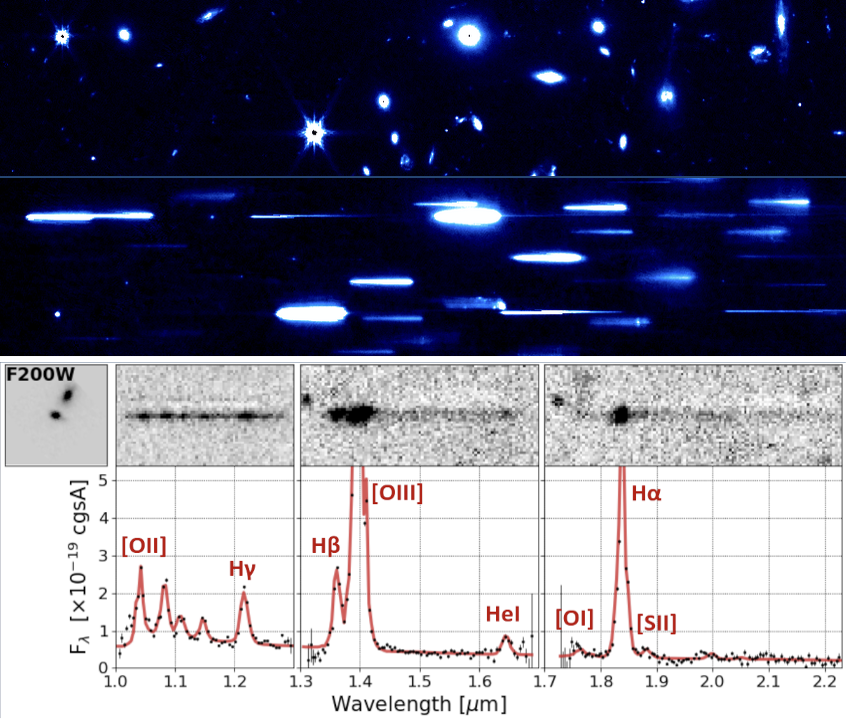
An example image from PASSAGE, a James Webb Space Telescope (JWST) grism slitless spectroscopy program, showing the direct image (top panel) along with the grism-dispersed image (second panel) for the same field of view. The key advantage of this type of data is obtaining a spectrum for all of the objects simultaneously. The spectrum for an example galaxy (at z=1.8) is shown in the bottom two panels, showing the key strong nebular emission lines that allow us to measure the star formation rate, gas-phase metallicity, nebular dust, ISM ionization state, and many other physical properties of galaxies. Both Euclid and Roman missions will obtain this type of spectroscopy data for millions of galaxies!
What do you work on at IPAC?
I am a part of the Roman Science Support Center and my work is focused on the spectroscopic functionality of the Wide-Field Instrument (WFI) on the Nancy Grace Roman Space Telescope, which is the next NASA flagship mission. Roman is slated to launch by May 2027, but the team is on track for launch as early as fall 2026. Specifically, I am involved in the development of the calibration aspect of the pipeline that will process all the spectroscopy data taken by Roman. Our team will calibrate the in-flight performance of the Roman WFI spectroscopic mode.
Scientifically, I am interested in understanding how galaxies form and evolve through cosmic time by studying their star formation and the physical processes involved therein. One of the ways we achieve this is by looking at spectra of galaxies, particularly star-forming galaxies with bright nebular emission lines.
I am helping lead a large JWST program called PASSAGE, which has obtained hundreds of hours of grism slitless spectroscopy observations. We are now in the process of analyzing these data to measure the star formation and chemical properties for some of the faintest-ever galaxies uncovered in the early universe. I am also leading an effort to obtain Hubble imaging for these galaxies to constrain their rest-frame UV spectra and in turn, help get better constraints on their stellar masses and dust. While JWST enables us to reach the fainter galaxies, Roman and Euclid data will provide a much larger sample of the brighter population. I plan to delve into these massive datasets, particularly to answer some of the questions we simply cannot with the small area coverage of JWST and Hubble.
Clumpy galaxies are another area of interest for me. I was involved in a citizen-science project called Galaxy Zoo: Clump Scout, which helped identify galaxies with clumpy substructure in the Sloan Digital Sky Survey. Now I am leading a Hubble program to obtain high-resolution UV and optical imaging of a subset of these galaxies to investigate what drives the formation of these clumps in galaxies, how long they survive, and how they evolve over their lifetime.
What do you want to learn about next?
I continue to be constantly and thoroughly intrigued by our universe and how we ended up here.
I have been fortunate to witness the launch of a handful of new observatories. With each one, we seem to answer some of the questions and raise even more new ones. Countless questions remain about how galaxies formed and evolved into the present universe, along with an unknown number of questions that we haven't even thought to ask. For example, my ideas of galaxy formation have changed with the new observational results from JWST, as we keep finding galaxies at higher and higher redshifts where there should not have been many galaxies. I also believe that some of the dwarf galaxies discovered at lower redshifts and in the nearby universe are rather close analogs to these early galaxies and represent as the much more accessible laboratories that can help us understand the physics driving galaxy growth and evolution in the early universe.
The current Euclid and upcoming Roman missions are set out to solve the problem of dark energy, which is exciting in itself. I sit here on the edge of my seat waiting to find out what conventional knowledge they will bring into contention or what other questions come up that we haven't even thought of.
One question that I would really hope to see resolved in the near future is the value of the Hubble Constant. It feels like the estimates are going in two opposite directions, but the true value remains unknown. I am not sure if we have to change our understanding of cosmological models or find the problem in our observational methodology from the past several decades to converge on a commonly accepted solution. The same goes for dark energy, and I hope we get to a more detailed understanding of its nature and role in cosmic history during my lifetime.
Not to mention, the field of astronomy is undergoing a transition to a large data-driven science This is a very exciting time with lots of opportunities to discover and leverage new cross-disciplinary methodologies and techniques⎯like machine learning⎯to draw exciting scientific insights.
Tell us about a memorable time when you were observing the night sky.
One of my core memories has to do with resolving the Pleiades into separate stars with my naked eyes. Invariably, when looking up at the night sky, my eyes would get caught on the Pleiades star cluster and its distinctive appearance. Growing up, it only appeared as a fuzzy blob of light, not too different from what I would now call a nebula. However, when describing to others, I was always met with confusion as they would point out the seven stars that make up Pleiades.
Well, as it turns out, this is how I found out I was near-sighted! Even today, I often look up to see if I can resolve the Pleiades with my naked eye, or if I need to go get my prescription updated.
What do you enjoy doing (besides astronomy research!)?
One of the ways I enjoy decompressing outside of work is to dive into fictional universes, which can take several different forms. I love immersing myself in science fiction books, shows, and movies. Another personal favorite of mine are high-fantasy settings, whether it is in books or in movies. I also enjoy disconnecting from work and the world by distracting myself with games and puzzles. I like participating in fantasy role playing games.
Pasadena offers great ways to escape into the nature, with hiking trails, beautiful gardens, mountainous views, or simply the local parrot population flocking and squawking on the nearest tree. I have also come to enjoy the variety of cuisines available in the local area and often make it a point to sample as many different options as I can over time.
Previous Featured Scientist
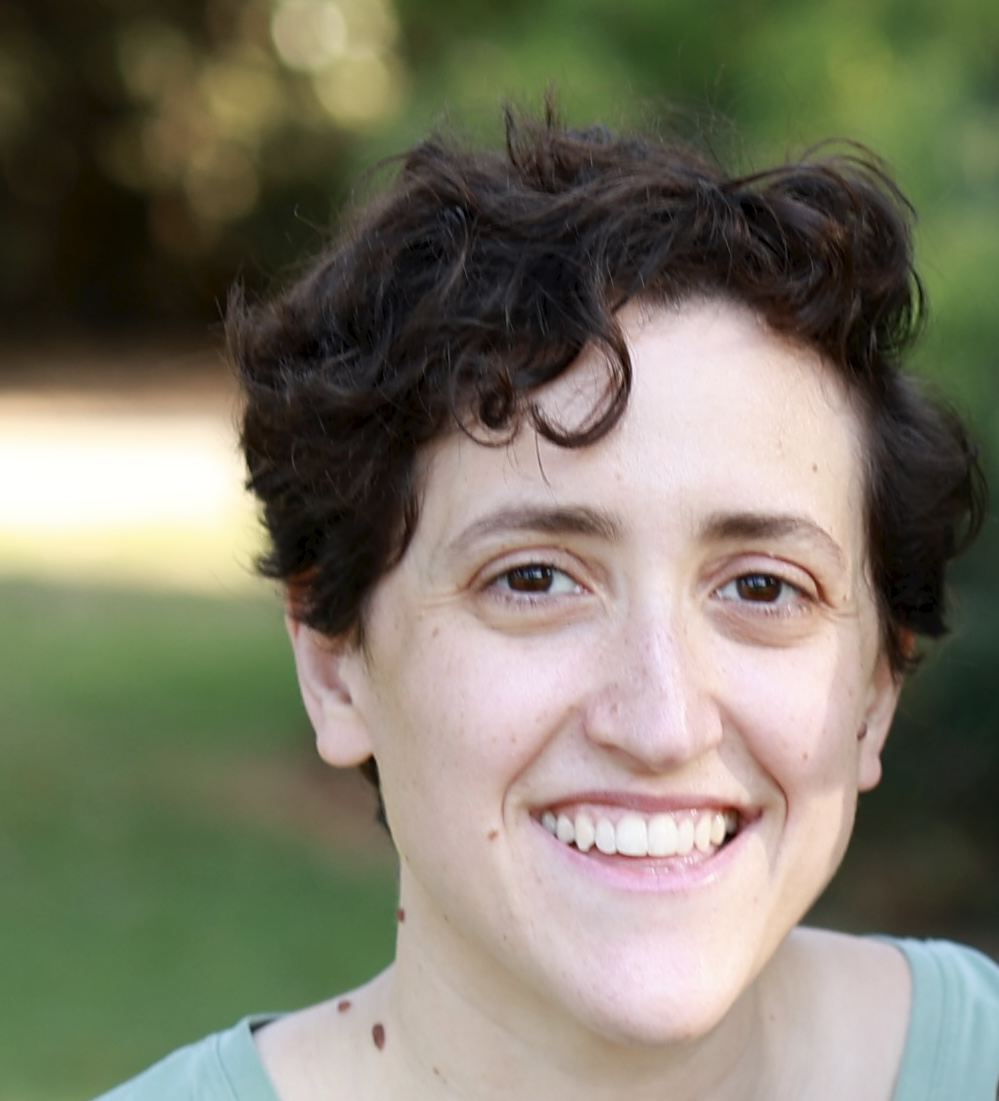
In this profile, we feature Alexandra (“Alex”) Greenbaum, who leads NASA’s Nancy Grace Roman Space Telescope Coronagraph Data Management System at IPAC’s Roman Science Support Center.
Next Featured Scientist

Greg Walth works at IPAC’s Roman Science Support Center where he is developing the pipeline to optimize NASA’s Nancy Grace Roman Space Telescope’s Wide Field Instrument (WFI) spectral data for...