
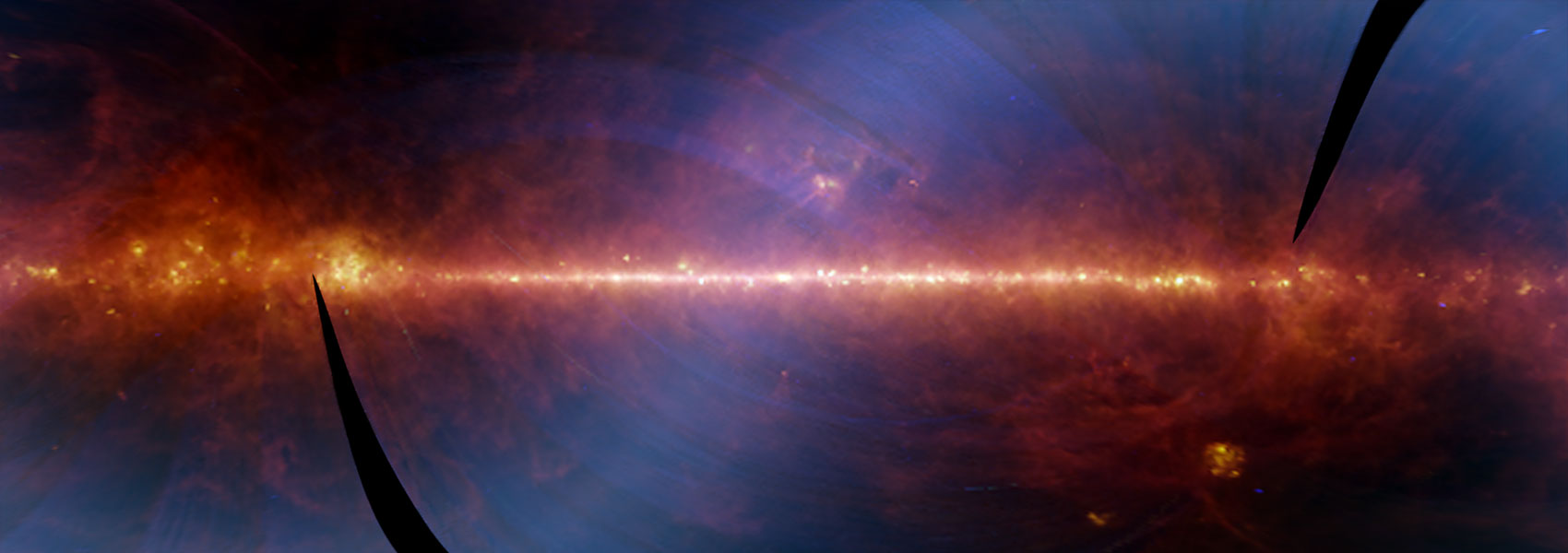
Iras-allsky

COSMOS-3D: Spectro-photometric Confirmation of Shabgard, A Cool, Metal-poor Brown Dwarf in the COSMOS Field

October 2026 • 2026PASP..138j4402S

Authors • Salmasi, Bahareh S. • Jalan, Priyanka • Goto, Tomotsugu • Hashimoto, Tetsuya • Wang, Feige • Zafar, Tayyaba • Kakiichi, Koki • Kilerci, Ece • Ayyappan, Srivardini • Meyer, Romain A. • Mailvaganam, Anilkumar • Mukherjee, Tamal • Lyu, Xuanyi • Aalia, Imam Uzma • Raidani, Arihant • Carlson, Samuel • Martinez, Jose Luis Carrillo • Faisst, Andreas L. • Shuntov, Marko • Akins, Hollis B. • Li, Zihao • Cosmos-3D Collaboration

Abstract • Brown dwarfs are unique laboratories for studying the physics of cool atmospheres, the low-mass end of star formation, and the transition between stars and giant planets. Their spectra encode the effects of temperature, gravity, metallicity, clouds, and disequilibrium chemistry, but identifying and characterizing the coldest brown dwarfs remains challenging, particularly at faint magnitudes in deep extragalactic surveys. We aim to establish the nature and atmospheric properties of COSMOS2025 ID 639188, hereafter Shabgard, a compact source previously selected as a brown-dwarf candidate from COSMOS-Web photometry on the basis of its point-source morphology and T/Y-dwarf-like NIRCam colors. In this work, we characterize this source using serendipitous JWST/NIRCam F444W wide-field slitless spectroscopy from COSMOS-3D. We extract its local-background-subtracted, profile-weighted 4.05--4.85 μm spectrum, combine it with COSMOS2025 NIRCam photometry, compare the data with six atmosphere-model families, and measure its motion using multi-epoch NIRCam imaging. The LOWZ atmosphere-grid fit, based on principal component analysis (PCA) interpolation and Markov Chain Monte Carlo (MCMC) sampling, gives Teff=718.6-10.2+10.6 K and [M/H]=-1.00-0.08+0.07 , favoring a cool, subsolar-metallicity atmosphere characteristic of the late-T/Y transition. A fixed-atmosphere molecular-opacity test strongly favors a contribution from CH4 to the observed 4--5 μm spectral shape. The restricted wavelength coverage, however, prevents a molecule-by-molecule abundance determination. Model-dependent physical estimates span approximately 23--52 MJup and 140--180 pc. We measure a proper motion of ∣μ∣ = 89.2 ± 0.4 mas yr-1, while the LOWZ MCMC flux scaling gives a distance of 176.2-17.8+18.4 pc, supporting the interpretation of Shabgard as a Galactic brown dwarf. Together, these results support its classification as a cool, metal-poor brown dwarf and demonstrate the ability of JWST deep-field surveys to discover and characterize faint Galactic substellar objects.

Links


IPAC Authors
(alphabetical)

407-afaisst

Andreas Faisst

Staff Scientist