
Astronomical Image Time Series Segmentation for Faint, Fast Object Detection
May 2026 • 2026AJ....171..303C
Abstract
•
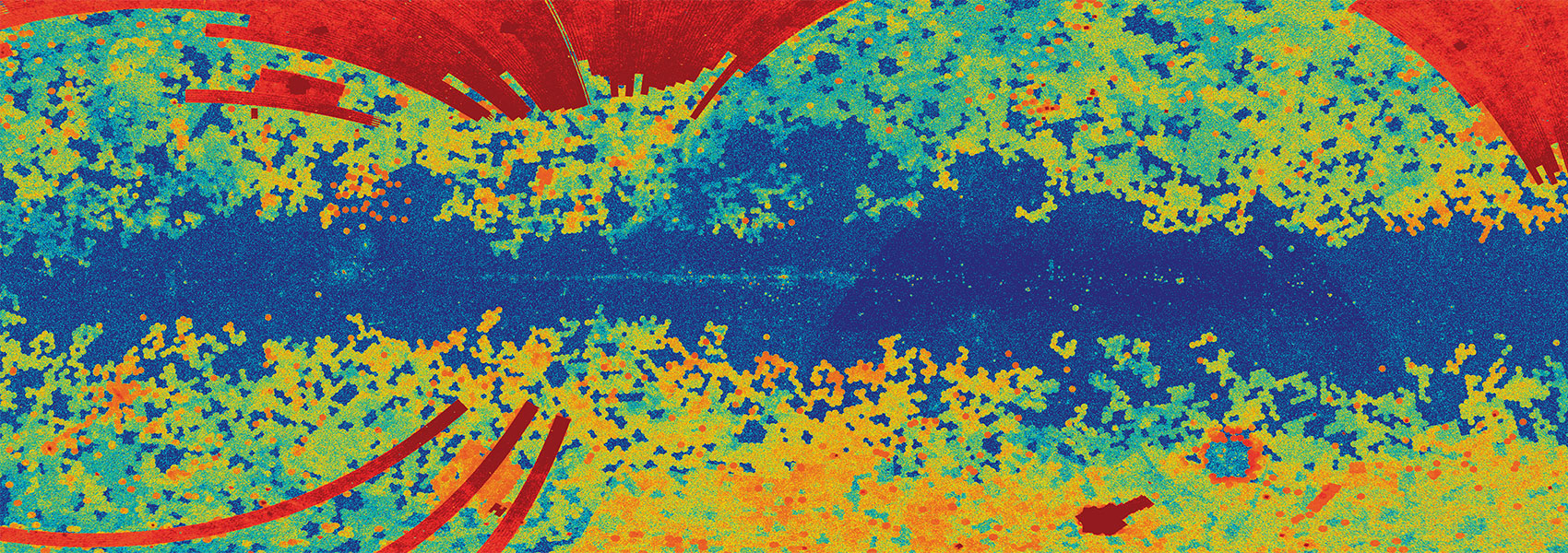
We present a method for detecting faint, fast-moving objects in astronomical image time series using image segmentation via a recurrent convolutional neural network called SMDET. We use SMDET to segment Wide-field Infrared Survey Explorer (WISE) image time series that cover the full sky and rank sky regions according to the predicted presence of faint, fast objects. We visually inspect the sky regions ranked in the top 0.01% and discover hundreds of moving objects that are subjects of existing and forthcoming publications. We use a volume-limited (≤20 pc) sample of faint, high proper motion brown dwarfs to estimate ranking performance and find that we recover 94% of this sample in the top 0.01% ranked sky regions. We measure astrometry and photometry from the SMDET output and find that our search pushes fainter than any prior WISE-based search for high proper motion (
Links
IPAC Authors
(alphabetical)
Associate Scientist
.png?1523393848)
Senior Scientist
Assistant Scientist