Charles “Chas” Beichman Steps Down from NExScI Executive Director Role
Written by Marcy Harbut
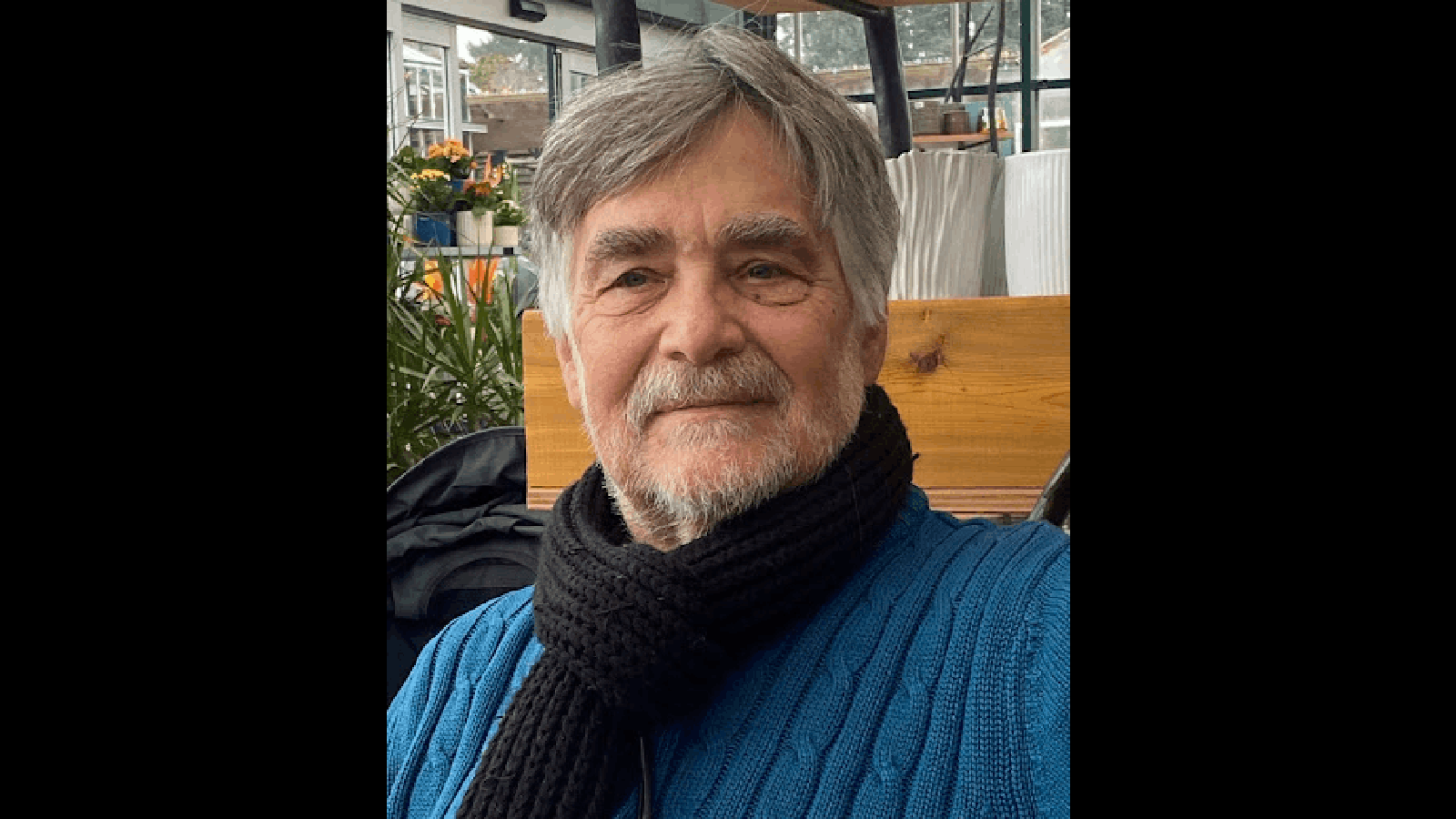
Charles “Chas” Beichman has stepped down as Executive Director of the NASA Exoplanet Science Institute (NExScI), effective December 2, 2025. Beichman remains a JPL Fellow and Caltech Senior Faculty Associate and will serve in an advisory role to IPAC and NExScI leadership as well as to the NASA Exoplanet Exploration Program.
Beichman has long been engaged with exoplanet research, starting with the discovery of debris disks—believed to be created during the planetary formation process—by the Infrared Astronomical Satellite (IRAS) launched in 1983. Before taking on his role as NExScI Executive Director in 2003, he was Chief Scientist for Astrophysics at JPL where he helped initiate NASA’s Origins program to include exoplanet science soon after the discovery of 51 Pegasi b in 1995. The field of finding and characterizing planets outside the solar system has since exploded, with more than 6,000 confirmed exoplanets in the NASA Exoplanet Archive.
“I remember going to meetings of the AAS, where the number of people interested in exoplanets could fit into a small room where we'd sit around and talk about what we might do,” Beichman said. “Now, perhaps a third of each meeting is about exoplanets with hundreds of people talking about them in multiple parallel sessions during all five days of a meeting. That growth in the community has been fantastic to watch.”
Prior to leading NExScI, Beichman was the founding Executive Director of IPAC, a role he served in for 10 years, overseeing such contributions to astronomy as the 2MASS survey, US involvement in ESA’s Infrared Space Observatory (ISO) mission and laying the groundwork for IPAC’s role in NASA’s Wide-field Infrared Survey Explorer (WISE) and Spitzer Space Telescope missions.
IPAC Director Tom Greene said Beichman stepping down from the NExScI Executive Director role is the end of an era.
“NExScI has established itself as one of the world’s leading research centers in advancing exoplanet science, and this would not have occurred without Chas Beichman’s leadership, strategic vision, effort, and finesse,” Greene said. “Chas led NExScI as the field of exoplanet science progressed from knowing of a few hundred exoplanets to now over 6,000 planets, many of which with measured masses, radii, and atmospheric compositions. This explosion of information on planets and their host stars would have been unmanageable without NExScI’s efforts to organize it all in the NASA Exoplanet Archive.”
Under Beichman’s guidance, NExScI and its precursor, the Michelson Science Center (re-named in 2008 to reflect the growing interest in exoplanets), has hosted, mentored, and trained thousands of researchers as part of the annual Sagan Summer Workshop. The workshop provides attendees—many of them graduate students and postdocs—an opportunity to explore the tools and techniques to find and study exoplanets. NExScI also co-administers the NASA Hubble Fellowship Program (NHFP), including Sagan exoplanet Fellows, which combined with the previous Sagan and Michelson Fellowship Programs, has helped kick-start the careers of roughly 100 researchers who are now experts in exoplanet science.
“What's been incredible is to know that we've had people who first came as students to Michelson or Sagan Summer Workshops, or as Michelson or Sagan postdocs, who now come as presenters,” Beichman said. “That’s a 25-year history of training the people who now have very significant roles in the community.”
As Executive Director, Beichman was the selection official for NASA’s one-sixth share on the two Keck 10-meter telescopes and served as a member of the Keck Science Steering Committee. He also oversaw the establishment of several cutting-edge tools and data archives that are considered the crown jewels of NExScI, including the NASA Exoplanet Archive, the Keck Observatory Archive, and the Exoplanet Follow-up Observing Program (ExoFOP). ExoFOP is an innovative database for researchers to collaborate and share observational data to confirm exoplanet candidates that recently celebrated one million file uploads.
Dr. David Ciardi, who was named Deputy Director of NExScI in May 2024, is serving as Acting Executive Director of NExScI.
For Ciardi, stepping into his longtime mentor’s shoes is both bittersweet and exciting. “Chas has an amazing ability to combine technical know-how with scientific vision, and he’s had an extraordinary impact on the careers of countless scientists and engineers—myself included,” Ciardi said. “I would not be here if it were not for his support and mentorship for more than 20 years. He will be greatly missed as Executive Director for NExScI, but his legacy and the impact of his work will be felt for generations—especially as we move toward discovering life on other worlds.”
“NExScI has a bright future ahead,” said Greene. “Dr. David Ciardi is now its acting Director after serving as its Chief Scientist and then its Deputy Director since 2017. Dr. Ciardi is a highly productive internationally recognized exoplanet scientist and is leading the development of the NASA Ariel Science Center and the Pandora mission data archiving at IPAC and NExScI. Like Chas, David is well integrated into the management of both organizations and leads them to maximize the scientific value of their work.”
Beichman may be stepping away from day-to-day duties managing NExScI, but his research pursuits will continue—especially with the approaching launch of NASA’s Nancy Grace Roman Space Telescope. In addition to focusing on the confirmation of a Saturn-mass candidate planet orbiting Alpha Centauri A, our closest neighboring star system, he’s excited about what Roman’s microlensing capabilities will yield for exoplanet science.
“Microlensing is the last big piece of the puzzle,” said Beichman, who describes the various exoplanet observational techniques as complementary, like in the fable of the blind men describing different parts of an elephant. “I’d really like to see Roman succeed and nail down the demographics of exoplanets, so we get an idea of what the elephant looks like. Right now, we don’t really know if our solar system is common or not, and I think, statistically, we’ll be able to determine that.”
In conclusion, Beichman said, “I feel privileged to have been involved with two major revolutions. First, the infrared revolution, starting with the IRAS and early days at IPAC, and then the exoplanet revolution—two paradigm-shifting and groundbreaking subfields within astrophysics. Even more, I have been privileged to work for over 40 years with a great team of scientists, engineers, and support staff who have made all of IPAC and NExScI's accomplishments possible."
- Date: December 3rd, 2025
- Category: IPAC News
- View Image