
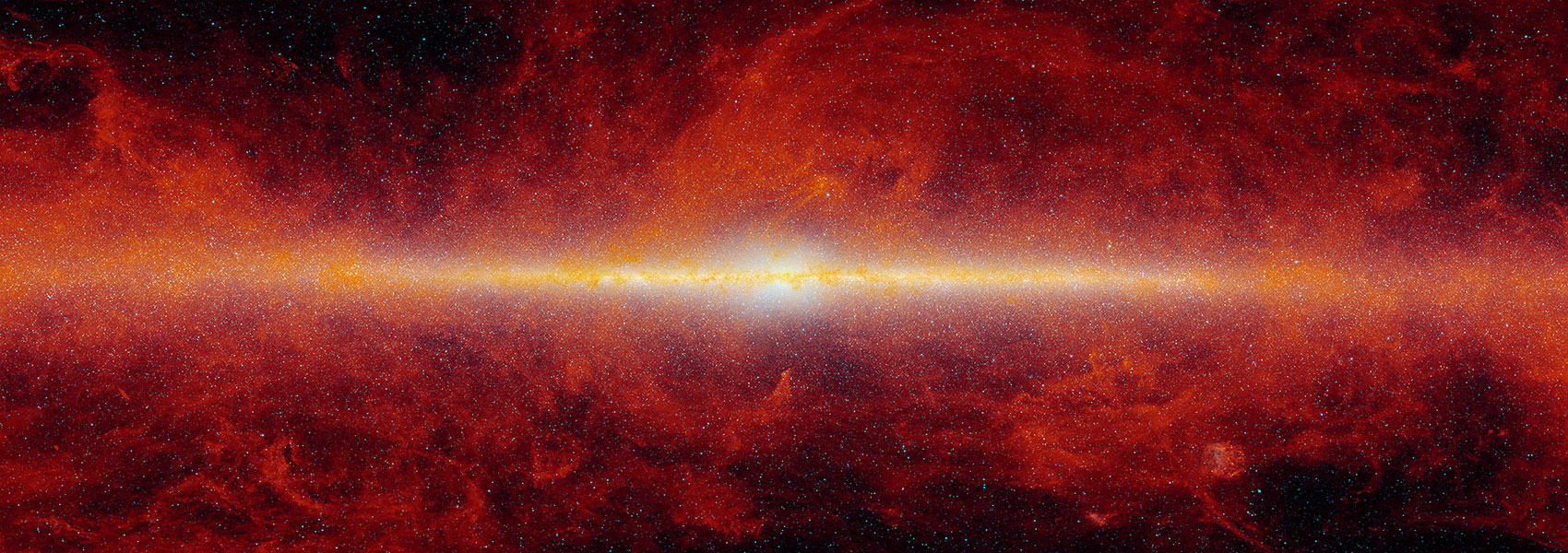
Peter Boorman (Caltech): "Piecing Together the Dining Habits of Supermassive Black Holes"
Most of the interstellar material that spirals in to feed supermassive black holes in active galactic nuclei (AGN) is accreted behind thick clouds of gas and dust that obscure and conceal many electromagnetic signatures of the accretion flow. The relative amount of heavily obscured (aka Compton-thick) AGN provides important insights into the region between interstellar space and the central engine, as well as the co-evolution between supermassive black holes and galaxies across cosmic time. However, a fundamental requirement that has proven difficult to date is to select the most obscured AGN with approximately equal efficacy as the (often brighter) less-obscured population. To explore such issues, I will first present NuLANDS — one of the largest NuSTAR legacy surveys performed, based on combined mid-to-far infrared selection and broadband X-ray constraints, aimed at constructing an obscuration-unbiased census of AGN in the local universe. I will then highlight the NuLANDS AGN obscuration distribution, in which we directly measure a Compton-thick AGN abundance that is consistent with the most recent estimates from Cosmic X-ray Background synthesis modelling for the first time. Any biases imposed by the NuLANDS AGN selection additionally imply an even higher obscured AGN abundance, although preliminary tests for biases find no strong effects on the measured obscuration distribution. NuLANDS is thus an optimised sample for future follow-up with current and next-generation instruments aiming to understand the dining habits of supermassive black holes in an isotropic manner.
- Date: 12:15 PM, September 3rd, 2025
- Location: MR-102 and Online on Zoom
- Category: IPAC Space Sciences Seminar