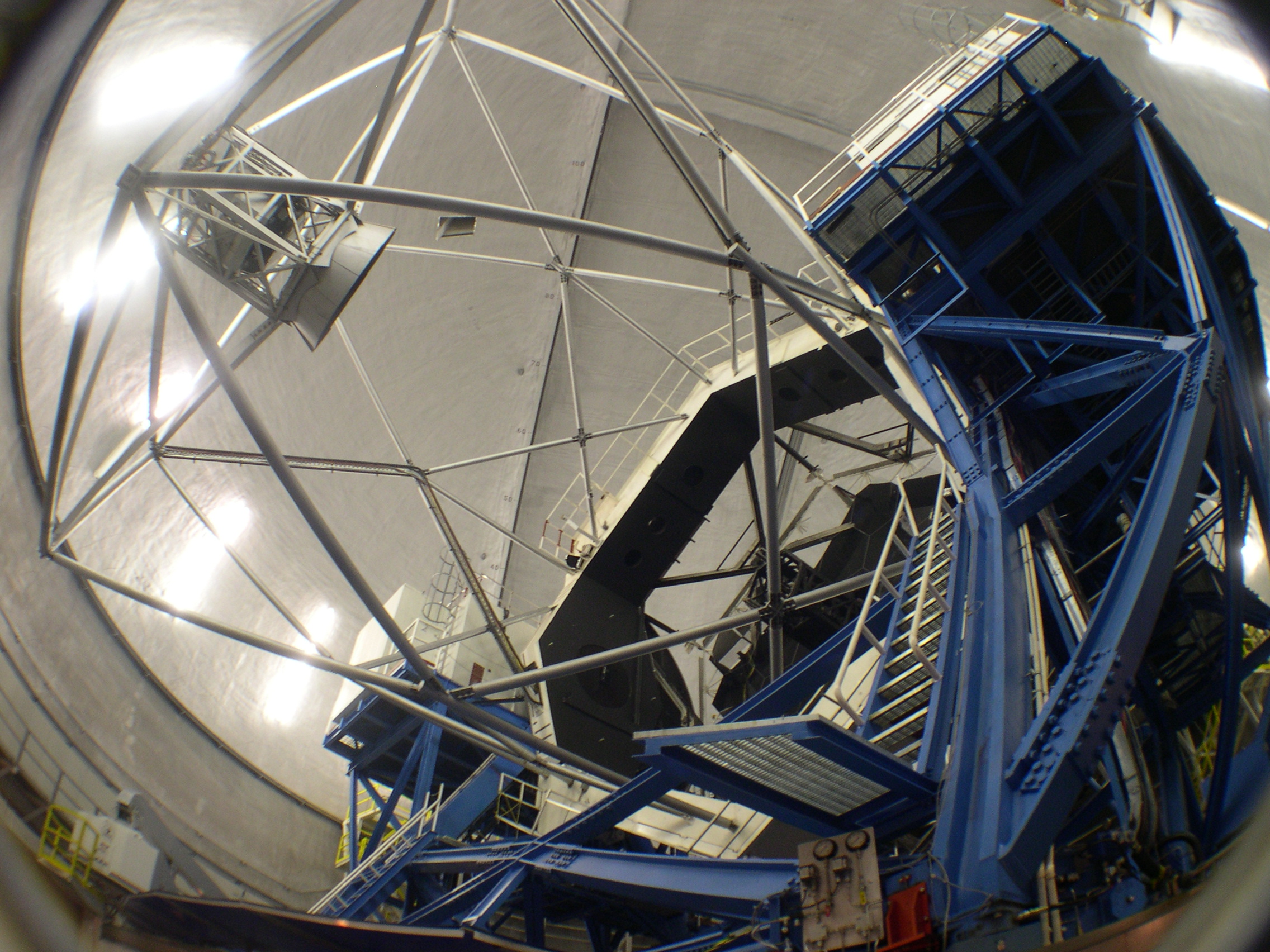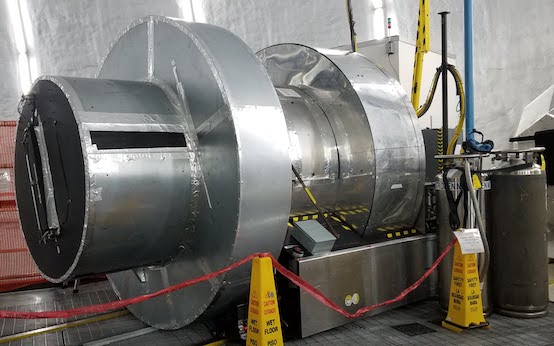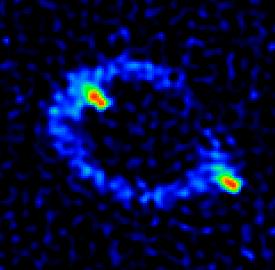
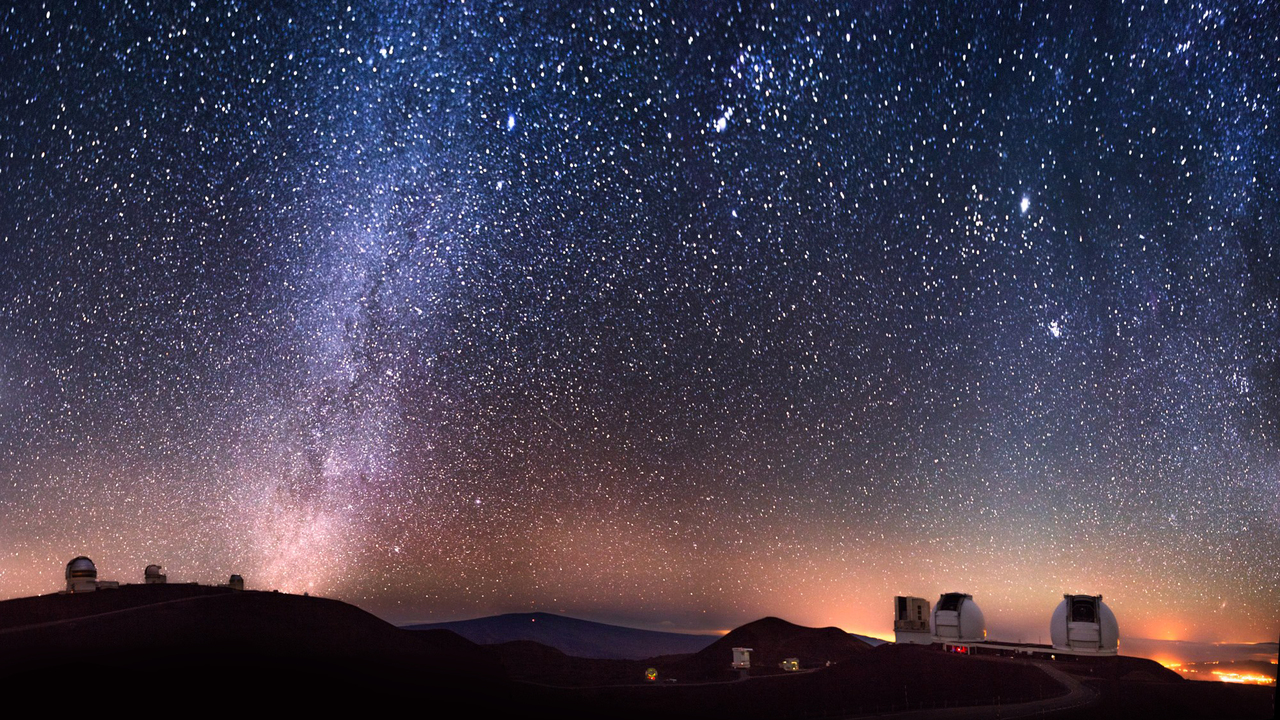

Overview: The Keck Observatory Archive is a NASA-funded collaboration between NExScI/IPAC and the W. M. Keck Observatory. KOA’s goal is to provide a long-term archive for all observations acquired at the two 10-m telescopes of the W. M. Keck Observatory on Mauna Kea, Hawaii.
The Keck Observatory Archive takes advantage of the Observatory’s expertise with instrumentation, operations, and data organization, and of NExScI/IPAC’s expertise and infrastructure for archiving and serving large and complex data sets. Data access is governed by a policy signed by the partner institutions and implemented by KOA. Principal Investigators and their collaborators have exclusive access to their data for at least 18 months after the date of observation, after which they become publicly available.
KOA archives all science and calibration observations obtained since the Observatory started operations in 1994. As of Fall 2016, these observations include those acquired by eight active instruments and two decommissioned instruments. As new instruments are commissioned at the Observatory, their data will be archived in KOA.
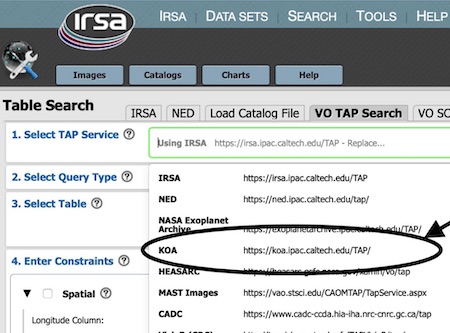
The Observatory prepares newly acquired data for ingestion into the archive. These data are then electronically transferred to the archive data storage and database system at NExScI. KOA has its own dedicated hardware with software architecture based on the Science Information system originally developed for the NASA/IPAC Infrared Science Archive (IRSA). Astronomers access KOA through a web page, where they can launch queries to discover and visualize data, and download data for analysis.
Public data products include browse versions (JPEG images) of raw data, as well as reduced browse quality data for the following instruments: HIRES echelle spectrograph, NIRC2 imager, NIRSPEC infrared echelle spectrograph, LWS long-wave spectrograph, and the OSIRIS integral field spectrograph. KOA staff adapted and extended existing data reduction programs to create these reduced products. In the long-term, KOA will collaborate with the Observatory to create automated data reduction programs suitable for all Observatory instruments.
The vast amount of publically available data in KOA has led to innovative research and the creation of new data products. The Keck Observatory Database of Ionized Absorption toward Quasars (KODIAQ) studied galactic and circumgalactic gas in absorption at high-redshifts. The KODIAQ project resulted in a collection of reduced, continuum normalized quasar spectra derived from public HIRES raw data. These data are now archived and served through KOA. Research papers citing the use of KOA cover fields as diverse as the structure of the intergalactic medium, stellar evolution through studies of stellar abundances and ages, and spectroscopic and imaging searches for exoplanets and faint stellar companions.
Mission News